Partager
Partager
Electroless Nickel Plating on Aluminum: Combining Lightweight Performance, Durability and Surface Protection
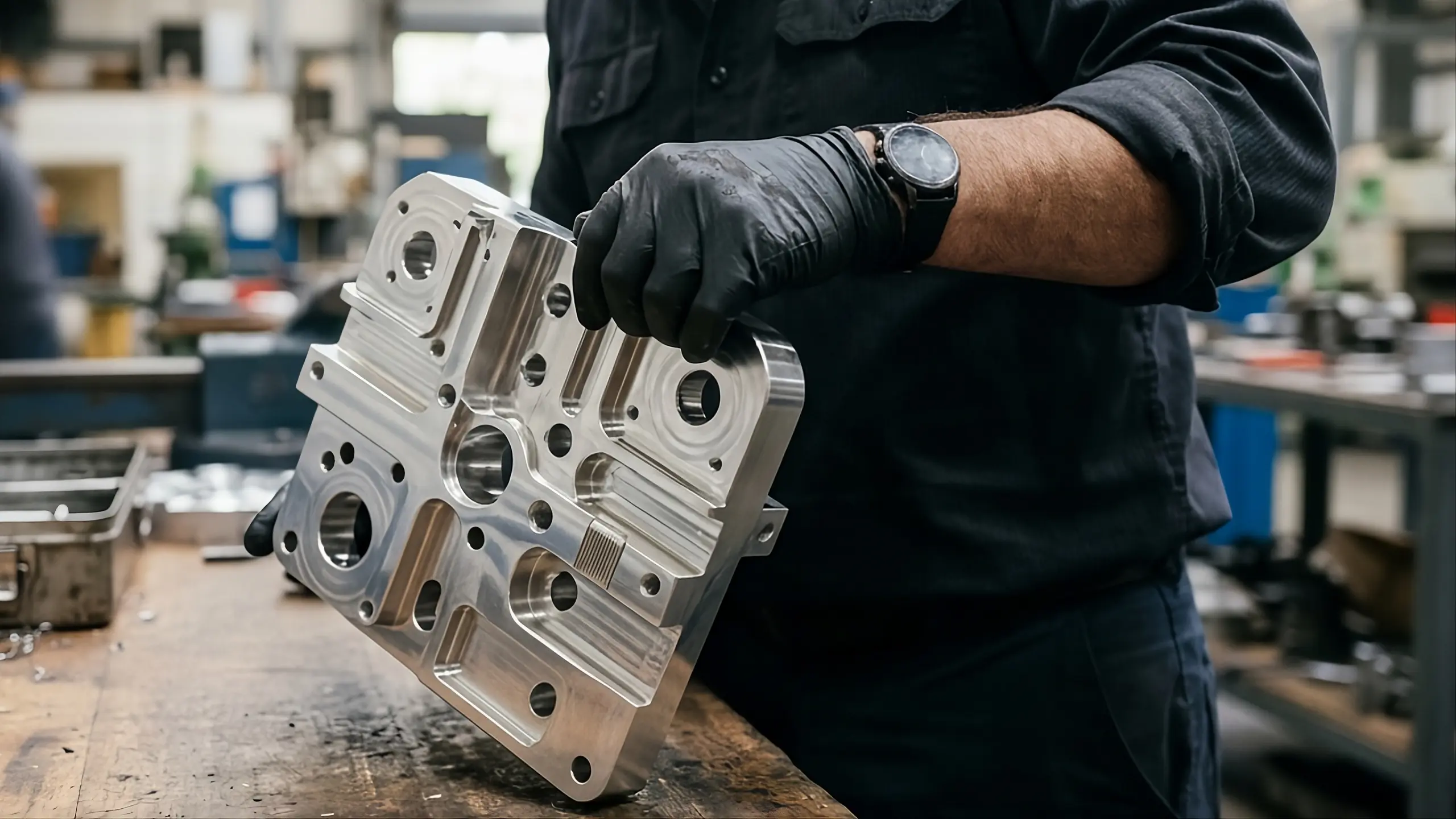
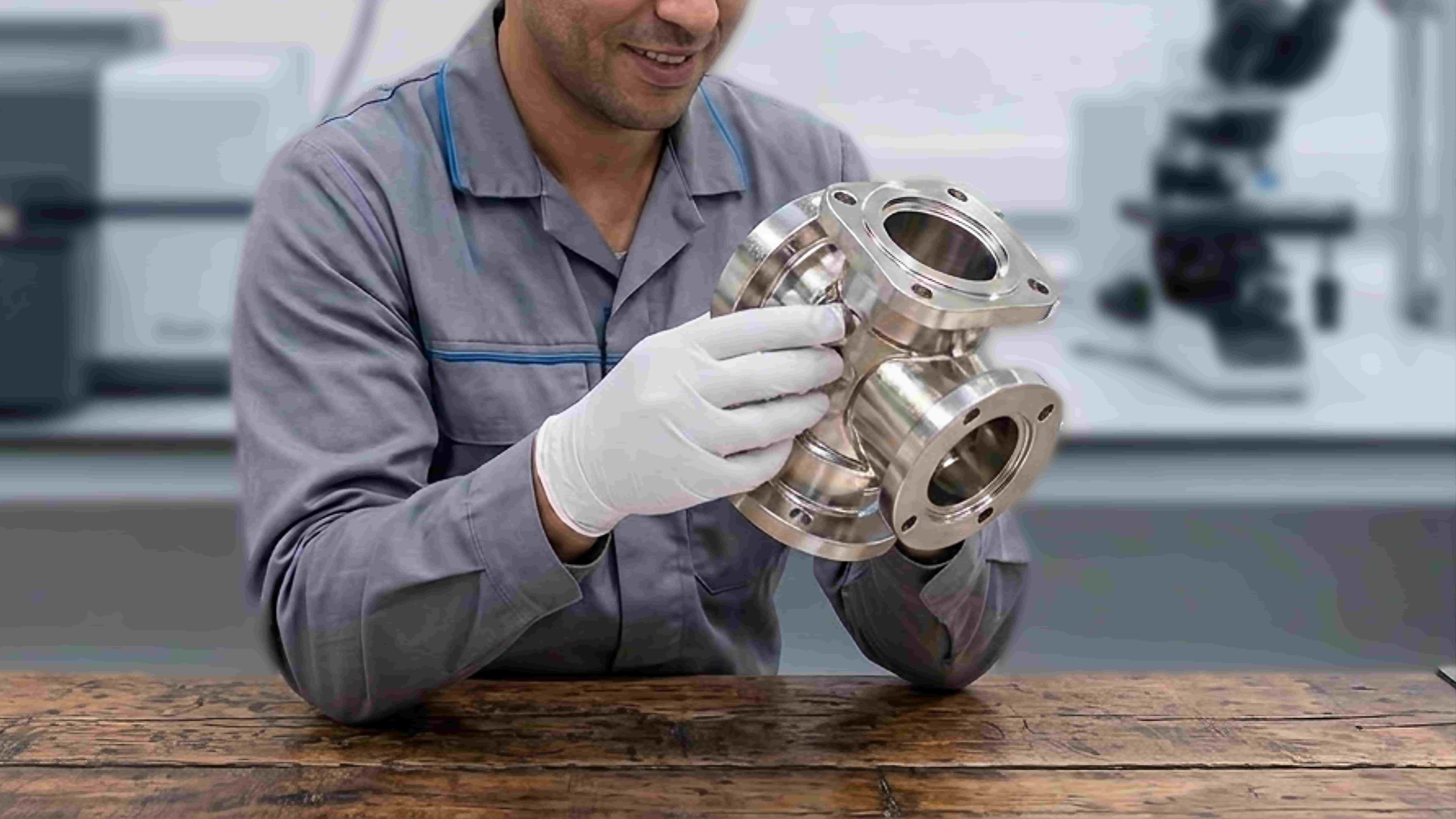
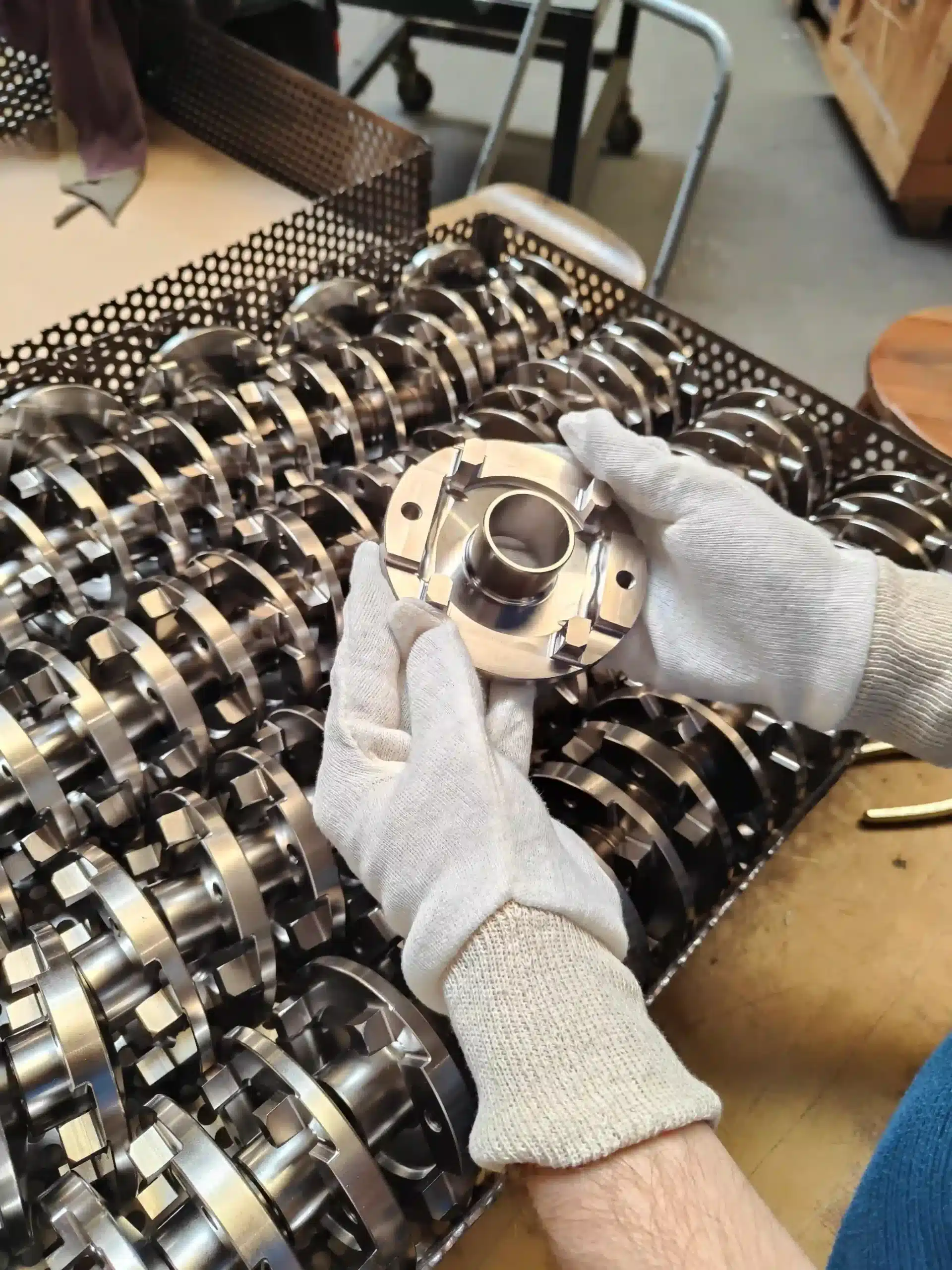
Electroless nickel plating on aluminum combines the lightweight advantages of aluminum with outstanding wear resistance, corrosion protection, and mechanical durability. This advanced surface treatment enhances component performance when bare aluminum no longer meets the demands of demanding industrial environments.
Aluminum offers an excellent strength-to-weight ratio, outstanding machinability, and good natural corrosion resistance. However, its surface hardness remains limited for certain industrial applications.
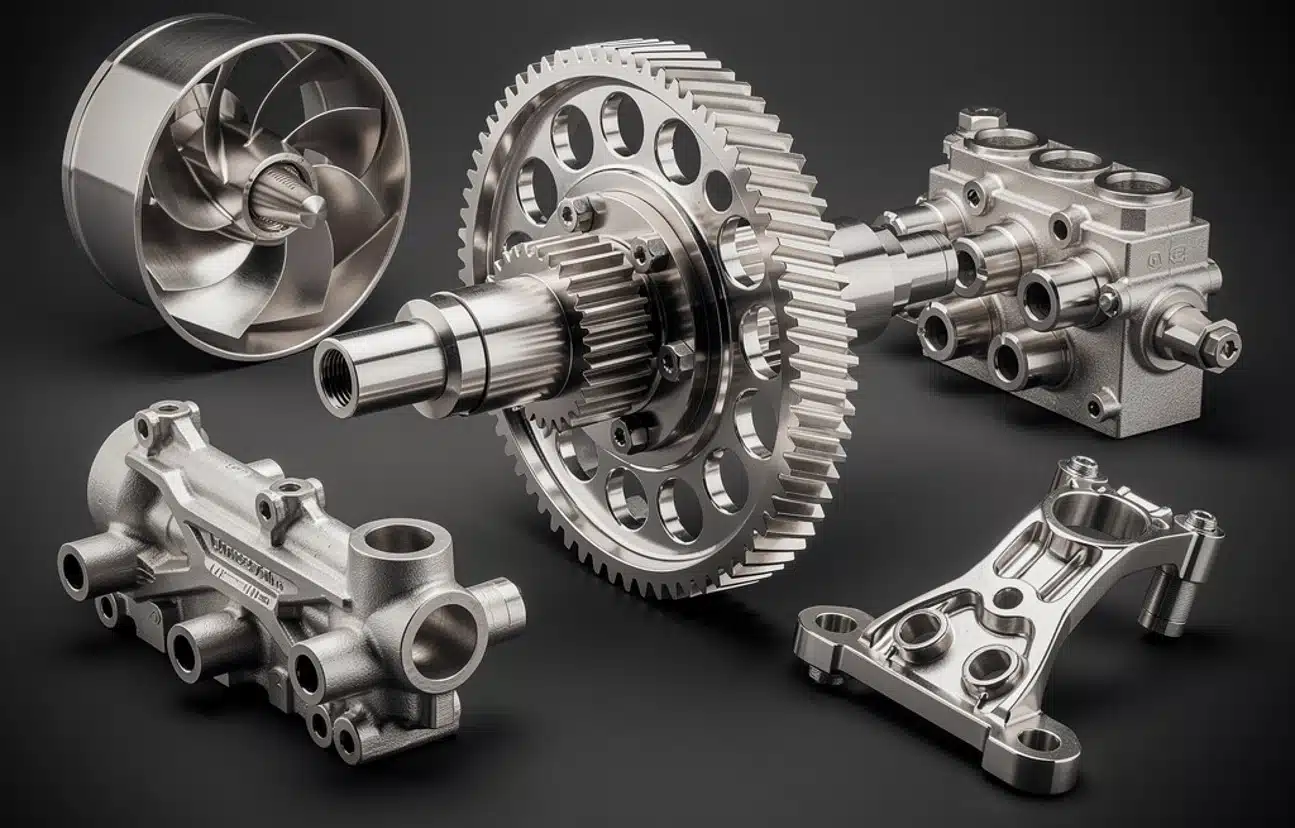
Electroless nickel plating preserves the benefits of aluminum while significantly improving its surface properties. As a result, manufacturers in aerospace, defense, energy, automotive, precision engineering, and luxury industries rely on this process to increase component reliability and service life.
Why Apply Electroless Nickel Plating on Aluminum?
Industries frequently select aluminum because of its low weight, mechanical properties, and ease of machining. However, repeated friction, abrasion, and corrosive operating conditions can reduce the lifespan of untreated aluminum components.
Electroless nickel plating addresses these challenges by depositing a uniform nickel-phosphorus coating over the entire surface. The coating acts as a protective barrier that improves durability without compromising the core properties of the aluminum substrate.
Key benefits include:
- Improved wear and abrasion resistance;
- Increased surface hardness;
- Enhanced corrosion protection;
- Reduced risk of galling and seizure;
- Preservation of dimensional tolerances;
- Extended component lifespan;
- Lower maintenance requirements and operating costs.
Unlike electrolytic nickel plating, electroless nickel plating does not require electrical current. Instead, an autocatalytic chemical reaction deposits nickel-phosphorus uniformly across the component.
This makes coating thickness far less dependent on part geometry and allows exceptionally consistent deposits, even on complex shapes.
Which Aluminum Alloys Can Be Electroless Nickel Plated?
Electroless nickel plating can be applied to virtually all aluminum alloy families. At Verbrugge, we regularly process alloys such as 6060 and 2017 aluminum.
Each alloy grade possesses unique chemical and metallurgical characteristics. Silicon, copper, magnesium, and other alloying elements can influence surface preparation and plating performance.
For this reason, pretreatment is adapted according to:
- Aluminum alloy grade;
- Surface condition;
- Manufacturing process;
- Presence of welds;
- Final application requirements.
When requesting a quotation, customers should provide:
- Exact aluminum alloy specification;
- Manufacturing method;
- Presence of welded areas;
- Initial surface finish;
- Required coating thickness;
- Areas to be plated or masked;
- Wear and corrosion requirements;
- Post-treatment dimensional tolerances.
This information allows us to develop a process specifically tailored to the technical objectives of the project.
Why Does Electroless Nickel Plating on Aluminum Require Special Surface Preparation?
Aluminum rapidly reacts with oxygen and naturally forms an oxide layer known as alumina.
Although this oxide protects the metal, it prevents direct adhesion of electroless nickel deposits. Proper surface preparation is therefore critical to achieving strong adhesion, coating uniformity, and long-term durability.
Typical pretreatment operations include:
- Degreasing;
- Removal of machining residues and contaminants;
- Oxide layer treatment;
- Surface activation;
- Zincate application;
- Intermediate rinsing steps;
- Strict process control.
Any contamination or inadequate preparation can compromise coating adhesion. Successful electroless nickel plating therefore depends just as much on pretreatment as on the deposition process itself.
The Importance of the Double Zincate Process
At Verbrugge, we generally perform a double zincate process before electroless nickel plating on aluminum. Compared with a single zincate treatment, the double zincate significantly improves nickel initiation and coating adhesion.
During pretreatment, acidic solutions remove the natural alumina layer. However, aluminum rapidly re-oxidizes when exposed to air.
The zincate process creates an ultra-thin intermediate layer that prevents immediate oxide formation and provides a suitable surface for nickel deposition.
The double zincate sequence consists of:
- Initial zincate application;
- Controlled stripping of the first zincate layer;
- Second zincate application.
The second zincate layer typically exhibits a finer and more uniform structure, creating ideal conditions for nickel-phosphorus deposition.
The double zincate process plays a critical role in:
- Deposit initiation;
- Uniform nucleation;
- Coating adhesion;
- Coating uniformity;
- Reducing blistering risks.
What Coating Thickness Should Be Applied?
The most common electroless nickel coating thicknesses range from 20 to 30 µm. Depending on functional requirements, deposits can range from approximately 3 to 100 µm.
Thickness selection primarily depends on:
- Corrosion protection requirements;
- Wear conditions;
- Expected service life;
- Dimensional tolerances;
- Component geometry;
- Build-up requirements for dimensional restoration;
- Engineering specifications.
Increasing coating thickness is not always the optimal solution. Since nickel deposits build up uniformly on all plated surfaces, dimensional growth must be considered during component design.
For example, a 25 µm coating increases an external diameter by approximately 50 µm because deposition occurs on both sides of the part.
Can Electroless Nickel Plating Uniformly Coat Complex Geometries?
One of the major advantages of electroless nickel plating is its exceptional thickness uniformity.
The process can effectively coat:
- External surfaces;
- Bores;
- Threads;
- Tapped holes;
- Certain cavities;
- Complex geometries;
- Hard-to-reach areas.
However, coating uniformity depends on proper solution circulation. Air pockets, blind holes, or enclosed cavities may prevent chemical contact with certain surfaces.
For complex components, Verbrugge carefully evaluates air evacuation and fluid circulation. Rotating fixtures may be used when necessary to improve solution exchange and coating consistency.
Electroless Nickel Plating and Surface Hardness
While the core properties of aluminum remain unchanged, the nickel-phosphorus coating dramatically improves surface hardness.
Hardness measurements are performed on the coating itself rather than on the aluminum substrate.
Electroless nickel significantly increases hardness, and post-plating heat treatment can further improve performance.
As an example, we have measured hardness increasing from approximately 160 HV before treatment to nearly 770 HV after plating and heat treatment.
This improvement provides:
- Reduced abrasion;
- Improved wear resistance;
- Greater resistance to mechanical contact;
- Longer service life;
- Reduced replacement frequency.
Enhanced Corrosion Resistance
Although aluminum naturally resists many forms of corrosion, highly aggressive industrial environments often exceed the protective capabilities of its oxide layer.
Electroless nickel plating creates an additional barrier between the substrate and its operating environment.
The coating is particularly beneficial in applications exposed to:
- Humidity;
- Salt spray environments;
- Hydrocarbons;
- Chemical agents;
- Aggressive industrial atmospheres;
- Repeated cleaning cycles.
Final corrosion performance depends on coating thickness, phosphorus content, surface condition, component geometry, and actual service conditions.
Common Defects That Can Affect Electroless Nickel Plating on Aluminum
Coating defects are not always caused by the plating bath itself. Component design and initial surface condition frequently play a critical role.
Common challenges include:
- Grease trapped in threaded holes;
- Machining residues;
- Persistent contamination;
- Installed helicoils;
- Blind holes;
- Closed cavities;
- Liquid retention zones;
- Air pockets;
- Non-sealed welds.
Improper preparation can lead to poor adhesion, cosmetic defects, or blistering after plating.
Designing Aluminum Components for Successful Surface Treatment
A common engineering mistake is considering surface finishing only after a component has been fully designed.
In reality, design decisions directly influence treatment feasibility, quality, and cost.
Before finalizing a design, engineers should evaluate:
- Air evacuation paths;
- Solution circulation;
- Drainage efficiency during rinsing;
- Presence of enclosed volumes;
- Need for vent or drain holes;
- Thread masking requirements;
- Coating thickness allowances;
- Fixture and orientation requirements.
Early collaboration between design engineers, machinists, and surface finishing specialists improves reliability and reduces project risks.
Can Welded Aluminum Components Be Electroless Nickel Plated?
Yes. Welded aluminum components can be plated successfully, although weld areas require particular attention.
Whenever possible, compatible filler materials should be used. Significant differences between filler and base alloy compositions may affect pretreatment behavior.
Weld quality is equally important. Porous or incomplete welds can trap chemicals, leading to post-plating leakage, discoloration, or localized coating failure.
Electroless Nickel Plating vs. Anodizing
Electroless nickel plating and anodizing serve different functions and should not be considered interchangeable.
Anodizing modifies the aluminum surface by forming a controlled oxide layer, while electroless nickel plating deposits a metallic nickel-phosphorus coating.
The appropriate solution depends on:
- Required hardness;
- Wear conditions;
- Corrosion environment;
- Electrical properties;
- Appearance requirements;
- Dimensional tolerances;
- Part geometry;
- Technical specifications.
Large Aluminum Components We Can Process
Electroless nickel plating is suitable for both precision components and large industrial assemblies.
We have successfully processed aluminum assemblies measuring up to approximately:
- 1,600 mm in length;
- 600 mm in width;
- 600 mm in height;
- 600 kg in weight.
Feasibility depends not only on dimensions but also on geometry, handling requirements, drainage, and solution circulation.
Case Study: Electroless Nickel Plating for a High-Pressure Pump Component
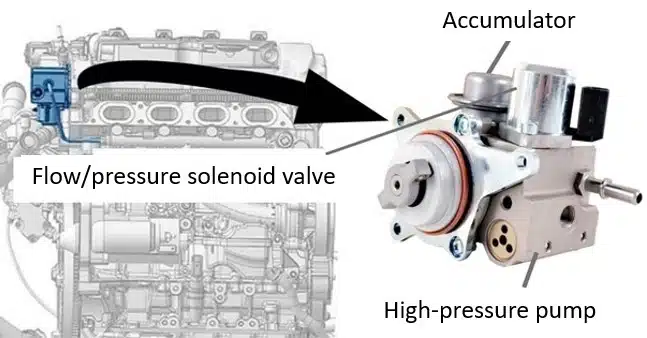
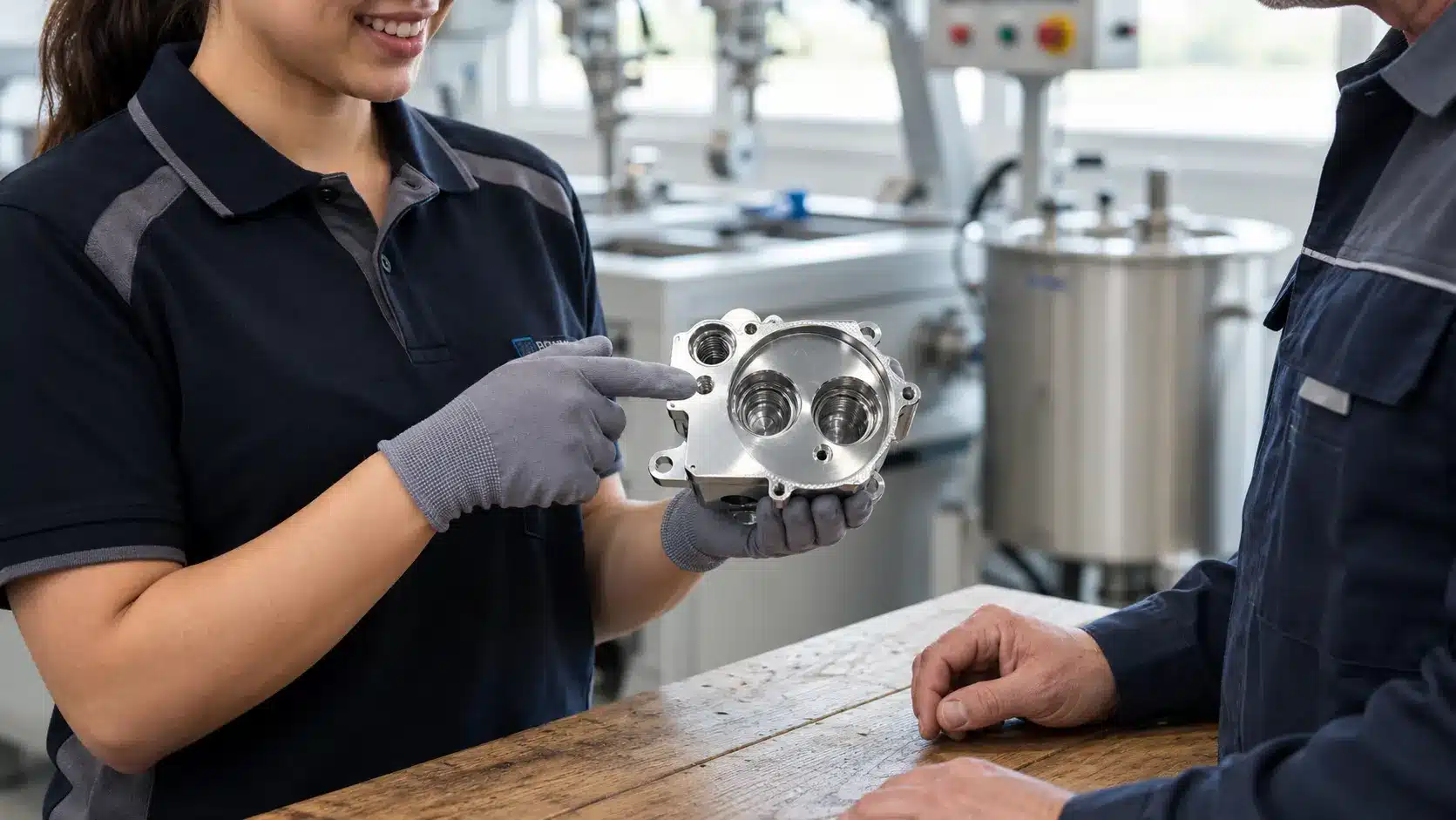
A practical example involved an aluminum component used in a high-pressure pump.
The objective was to maintain the lightweight benefits of aluminum while improving surface durability and extending service life.
The electroless nickel coating provided:
- Lightweight performance;
- Excellent machinability benefits;
- Improved surface hardness;
- Greater wear resistance;
- Enhanced protection during service.
This project demonstrates how electroless nickel plating can reduce total ownership costs by increasing component longevity.
Why Choose Verbrugge for Electroless Nickel Plating on Aluminum?
Successful electroless nickel plating depends on far more than the plating bath alone. It requires complete control of the process chain, from technical review through final inspection.
At Verbrugge, we assist customers by:
- Assessing aluminum alloy suitability;
- Defining optimal coating thickness;
- Identifying masking requirements;
- Evaluating retention risks;
- Managing dimensional tolerances;
- Reviewing welded assemblies;
- Developing solutions for complex geometries;
- Processing large components;
- Optimizing wear and corrosion resistance.
Our experience allows us to identify potential issues before production begins, reducing risks and unnecessary costs.
Frequently Asked Questions About Electroless Nickel Plating on Aluminum
Does electroless nickel adhere well to aluminum?
Yes. Proper surface preparation and particularly the double zincate process are critical for achieving strong and durable adhesion.
Why use a double zincate process?
A double zincate creates a finer and more uniform intermediate layer that promotes nickel nucleation and improves adhesion.
What coating thickness should I specify?
Most applications require 20 to 30 µm, although the optimal thickness depends on corrosion, wear, tolerance, and specification requirements.
Does electroless nickel plating affect dimensions?
Yes. Since the coating adds material, thickness must be considered when establishing pre-plating dimensions.
What defect is most common when preparation is inadequate?
Blistering and adhesion failures are among the most common risks associated with poor aluminum surface preparation.
Can threaded holes be plated?
Yes, but coating buildup reduces available thread clearance and may require masking.
Should helicoils be removed before plating?
Requirements vary depending on design, coating thickness, and dimensional objectives. Helicoils should always be disclosed during the quotation stage.
Can blind holes be plated?
Possibly. The geometry must be evaluated to determine whether air entrapment or chemical retention could affect coating quality.
What surface hardness can be achieved?
Depending on the deposit chemistry and heat treatment, hardness values approaching 770 HV may be achieved.
Can very large aluminum components be processed?
Yes, provided dimensions, handling requirements, and process compatibility are verified beforehand.
Conclusion
Electroless nickel plating on aluminum allows manufacturers to retain the lightweight, machinability, and structural advantages of aluminum while dramatically improving surface performance.
Through the use of a double zincate process, durable adhesion can be achieved on a highly reactive substrate. The uniform nickel-phosphorus coating enhances wear resistance, increases surface hardness, and provides superior corrosion protection.
Successful plating, however, requires a comprehensive engineering approach. Alloy selection, pretreatment, coating thickness, weld quality, threaded features, and retention areas must all be considered during technical review.
By involving Verbrugge early in the design stage, manufacturers can improve process reliability, optimize treatment costs, and maximize component service life.